Oakley M Frame Reviews: See Why 0 Shoppers Rated It 0 Stars!
We asked the crowd, and they answered: 0 takes on the Oakley M Frame sunglasses. The results? Mixed, juicy, and worth your read on :blogname.
 Supermod
 Moderator
 Recaptor
Oakley M Frame Review: Purpose-Built Performance for Sport and Safety
The Oakley M Frame has long been a go-to option for athletes and professionals who need eyewear that won’t blink when things get fast, dusty, or downright chaotic. This review of the Oakley M Frame draws entirely from the product’s specifications and published data, not hands-on testing, but the numbers tell a vivid story. We’re looking at a pair of sports sunglasses that lean into protection, visibility, and stability rather than flash—and sometimes that’s exactly what you want. If you’re the type who rides at dawn, sprints at noon, or trains till sunset, the M Frame’s spec sheet reads like a checklist of non-negotiables.
Why does this model matter? Because eyewear for sport isn’t just “nice to have.” It guards your vision, shapes your awareness, and—when properly engineered—stays invisible until you actually need it. On paper, the M Frame’s combination of a tough O-Matter-style construction (here noted simply as thermoplastic frame), wraparound coverage, and proven optics is designed to deliver in harsh light and high-speed situations. That being said, it’s also meant to be comfortable, and the spec sheet hints at a surprisingly easygoing fit for a performance-first design.
Detailed Specs & Features
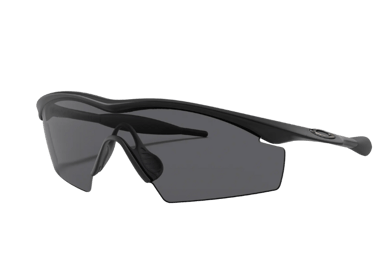
Let’s translate the specs into a simple narrative. The chassis is built from a resilient thermoplastic that prioritizes impact resistance without bloating the weight. The silhouette is a single-piece, wraparound shield with a semi-rimless style, which essentially means two things: fewer visual interruptions along the lower edge and a wider, more immersive field of view. If you’re tracking a wheel ahead of you—or, say, watching clay targets streak across your peripheral—this kind of design pays dividends.
Optically, the M Frame is defined by Oakley’s proprietary Plutonite lenses. According to the provided data, they block 100% of UVA/UVB/UVC, and the listed UV and scratch-resistant lens technology is tuned for hard use. No polarization is included by default, but the system supports an interchangeable lens setup with a quick-change mechanism, so switching between clear and grey tints is straightforward. On paper, that’s a big win for multi-sport users who move from pre-dawn warmups (clear lens) to mid-day rides (grey lens) without swapping the entire frame.
Protection is where the M Frame steps on the gas. The safety data lists ANSI Z87.1 compliance, which is serious business for high-velocity impact requirements; we’ll link it here once because it’s foundational: ANSI Z87.1. There’s also a listed MIL-PRF-32432 ballistic rating. While you should always confirm the exact configuration that carries each certification, those specs, as provided, speak to eyewear engineered for environments well beyond casual weekend jogs.
Comfort gets attention too. The M Frame is specced with a high-bridge geometry—linked here as High Bridge Fit—which typically helps the frame sit securely for those with higher nasal bridges. Add to that Oakley’s signature grippy temple tips made from Unobtanium, and you can see the intent: a steady, non-slip hold that actually gets tackier when you sweat. Lastly, while we won’t overlink it, the UV defense claims are central to the proposition; the spec sheet calls out 100% UV protection, which is the baseline protection serious users expect.
Design & Build
According to its design, the M Frame is minimal by intent. There’s no foldable party trick, no smart electronics, and no adjustable nose pads. Instead, the saddle-style bridge is meant to distribute pressure across a broader area, aiming to reduce hot spots during longer sessions. The semi-rimless build keeps the bottom of the lens unobstructed, which, on paper, should make downward glances cleaner—think bike computers, watches, or trail footing. The overall weight is listed as low, and the frame finish is matte, which is both understated and practical (glossy frames can reflect glare back at you in bright conditions). Is it flashy? No. But it’s function-forward in a way athletes often respect.
Performance
On paper, performance starts with the lens platform. The grey option is a natural pick for bright, exposed environments, while the clear lens covers low-light, indoor ranges, or night-time training. There’s no anti-reflective coating here and no polarization by default, so users who depend on polarization for cutting water glare (paddle sports, fishing) might wish it came in the box. Still, protection and clarity are the headliners—and the combination of the Plutonite lens material, the wraparound shield geometry, and those safety specs suggest that the M Frame’s primary mission is keeping your eyes safe while maintaining a crisp, wide field of view.
According to the specifications, changing lenses is fast thanks to the quick lens change mechanism. That means you’re better equipped to adapt to shifting light on the same outing—say, shadowy tree cover leading into a sunlit climb. On the flip side, because there’s no photochromic option listed, you’ll be swapping lenses yourself rather than relying on tint that changes automatically. For many, that’s a fair tradeoff: mechanical simplicity and durability in exchange for electrics-free control.
Display / Field of View
Eyewear doesn’t have a “display,” but the M Frame’s one-piece shield works like a panoramic screen for your eyes. The big benefit is uninterrupted sightlines across your periphery. If you run, ride, or play field sports, those extra degrees of lateral awareness can help you react sooner. Add in the semi-rimless lower edge and you’re less likely to “catch” the frame while checking a watch or checking your footing on a technical section.
Comfort & Stability
The specifications suggest a snug but not claustrophobic fit. The high-bridge architecture and Unobtanium temple tips aim to keep things locked down without a vise-like squeeze. Cushioning at contact points and a low pressure rating are listed; put together, that should translate into reduced fatigue during multi-hour use. And because there’s no spring hinge or adjustable temple length, you’re trading adjustability for simplicity—fewer parts to loosen or fail under stress.
Extra Features
There’s no smart connectivity here—no speakers, no HUD, no voice assistant. But the absence of electronics isn’t a drawback for everyone. What you do get is an interchangeable-lens platform with the quick-swap mechanism, broad light protection with the stated 100% UV coverage, and a frame that aims to survive the kind of bumps and scrapes sports inevitably deliver. In other words, the spec sheet paints a picture of durable simplicity—a tool you wear rather than a gadget you manage.
Pros & Cons
Pros
- Serious protection credentials with ANSI Z87.1 and MIL-PRF-32432 listed.
- Wide, unobstructed view from the wraparound shield design.
- Durable thermoplastic frame and Plutonite lenses built for tough conditions.
- Fast swaps via the quick lens change mechanism and interchangeable lens platform.
- Reliable hold thanks to Unobtanium temple tips and a stable high-bridge fit.
Cons
- No polarization or photochromic lens included by default.
- Limited fit adjustability (no adjustable nose pads, fixed temple length).
- Not aimed at fashion-first buyers; design is deliberately utilitarian.
- Anti-reflective coating is not listed, which some users prefer for night or indoor lighting.
Price & Value for Money
Pricing always puts specs into context. With a listed best price of $119 at Amazon, the Oakley M Frame lands in a sweet spot for purpose-built performance eyewear. You’re paying for impact resistance, a robust lens platform, and long-haul comfort rather than luxury branding or tech extras. For cyclists, runners, and range days, that’s often the smarter way to spend: fewer gimmicks, more fundamentals.
That being said, if you require polarization out of the box or crave a more adjustable fit with custom nose pads, you might look at alternatives that bundle those features (often at a higher price). If your use cases revolve around high-speed sport, variable light, and the occasional debris hazard, the M Frame spec sheet suggests you’re getting very solid value for the money.
Quick Take
The Oakley M Frame reads like a tool designed by people who hate distractions. It’s simple, protective, and tuned for changing light via lens swaps.
If you measure value in clear sightlines, reliable grip, and impact credentials rather than fashion sizzle, this package makes a strong, data-backed case.
Closing Recommendation
Based on the specifications alone, the Oakley M Frame is a smart pick for athletes and professionals who prioritize safety and optical stability over extras. It’s particularly compelling if you’re switching environments often and want a platform that supports quick lens changes without fuss. On the flip side, style-focused buyers or anyone who must have polarization baked in may prefer a different setup. But if “put it on and go” is the brief, the M Frame’s spec sheet answers convincingly.
Verdict
Rating: Based on the specifications and overall feature set, we believe Oakley M Frame deserves 4.4 out of 5.
- Winner Feature → Proven protection story (ANSI and ballistic ratings) with wide, shield-style coverage.
- Needs Improvement → No default polarization or photochromic option; limited on-frame adjustability.
Reviews 0
The good, the bad, and the brutally honest.Average Rating


More Sunglasses 367
Unlock more awesome finds.